PENALTY KICK ANALYSIS
This presentation reflects the desire to share a perspective on penalty kicks, based on the analysis of the sport itself and certain insights from the audiovisual field and the design of these actions.
Like any model, it is always subject to review and improvement, and it is entirely open to discussion.
It does not aim to be authoritative or give lessons, but simply offers my own perspective on the analysis of penalty kicks — a view examined through the response of goalkeepers and their interactions at the moment of play.
THE IMPORTANCE OF KNOWING THE RULES
In order to maximise all of the goalkeeper’s resources during penalty kicks, it is essential to understand the current rules that govern the situation.
CONSIDERATIONS: PENALTY KICK
Observe the tendencies of the penalty takers regarding the direction of their shots.
Analyse the kicker’s pre-indicators.
Existence of a shooting sequence.
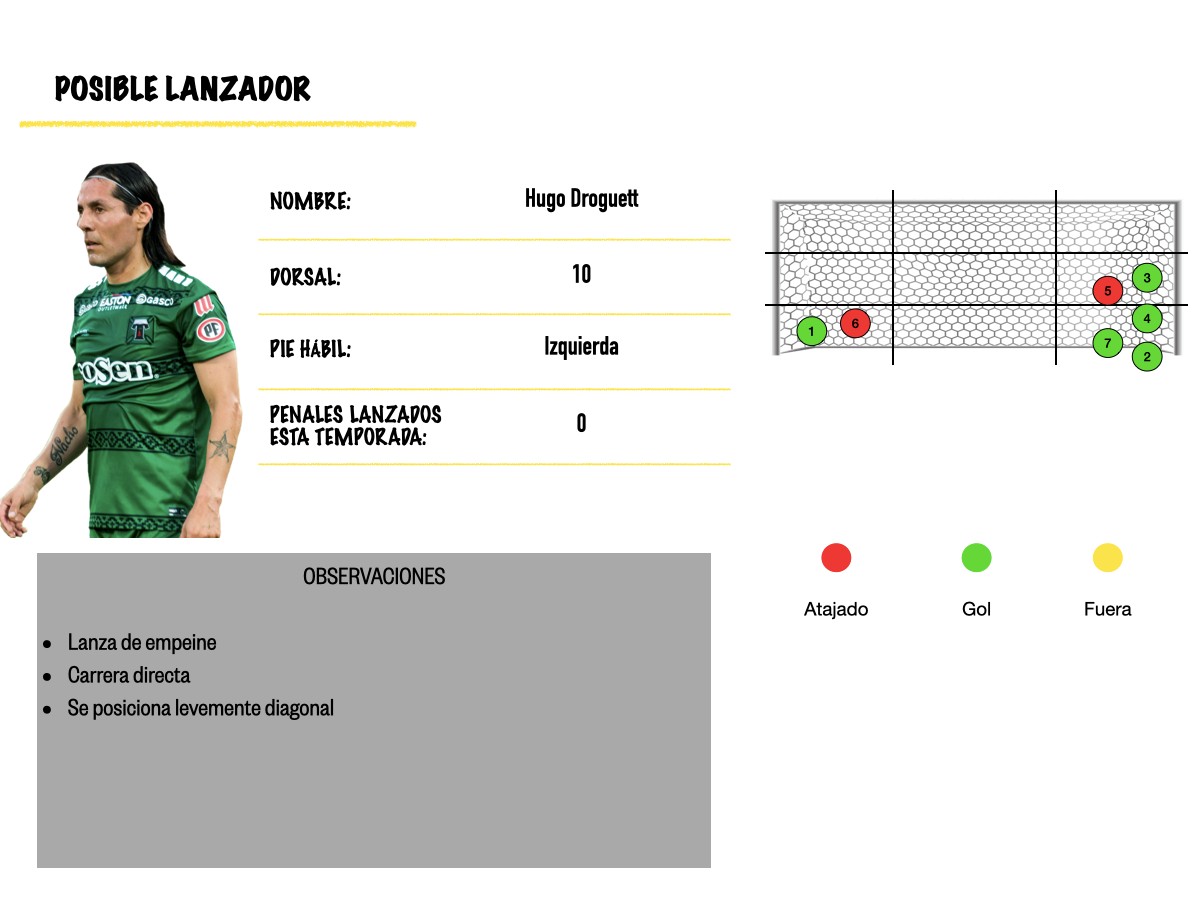
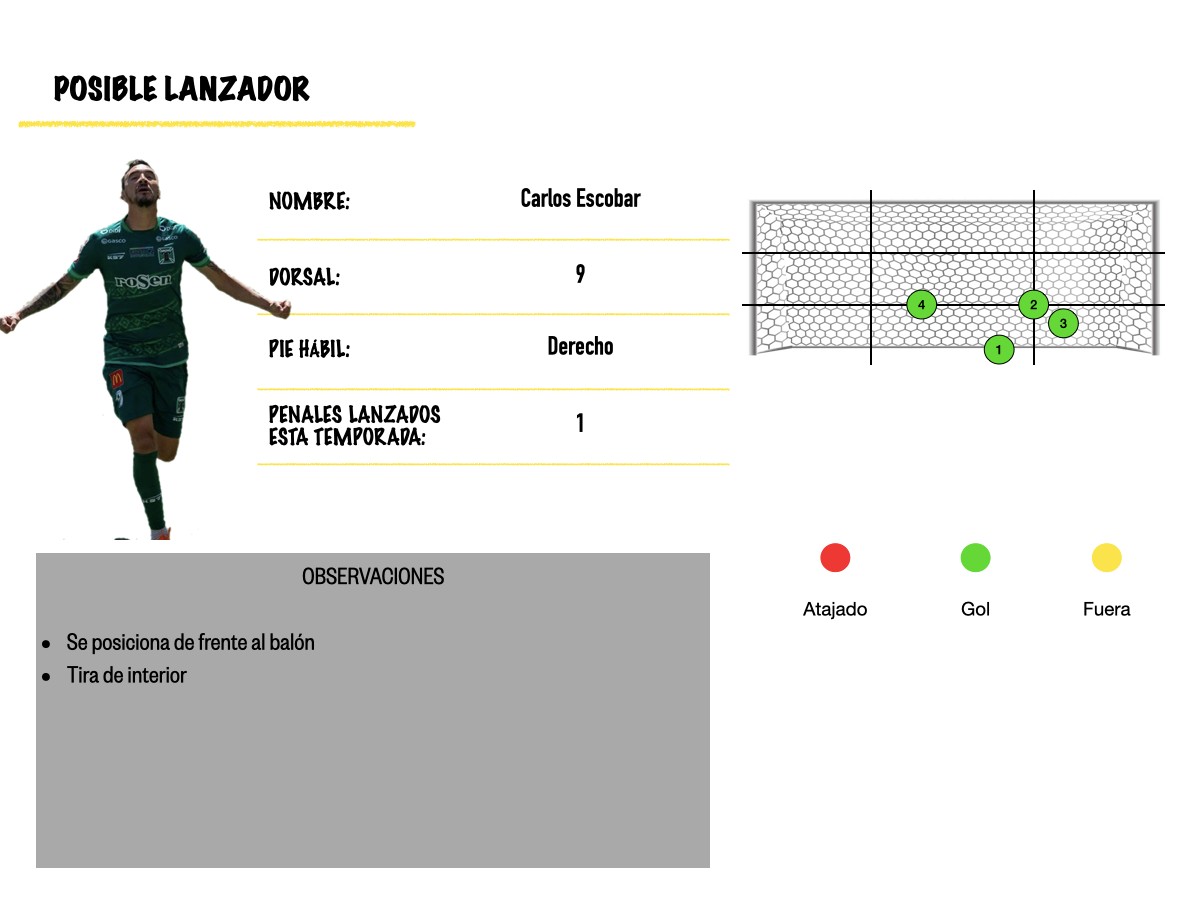
Audiovisual analysis and report for the goalkeepers.
PENALTY TAKER ANALYSIS
If we need to concentrate on the type of penalty taker, there are many categories nowadays. For this presentation, we will organise them as follows:
Executive penalty taker
Perceptive penalty taker
The EXECUTIVE penalty taker is someone who has already decided where to shoot the penalty before the kick happens. We can identify this type of taker because they always aim for the same side, their run-up to the ball is usually steady and without stops or feints, and they rarely glance at the goalkeeper. Against this type of taker, early feints by the goalkeeper are usually ineffective, so goalkeepers often rely on penalty statistics instead.
The PERCEPTIVE penalty taker is the one who decides where to shoot the penalty at the very last moment. Within this group, we can identify two subcategories:
1 – Perceptive taker who waits for the goalkeeper’s move: This player delays the shot, watching the goalkeeper closely and, once the keeper commits to one side, shoots to the opposite.
2 – Influenced perceptive taker: This player chooses their strategy on the spot based on various factors such as the match situation, their state, or external pressure.
Deception by the Penalty Taker: Many players, during their run-up to the ball, execute one or more feints in an attempt to mislead the goalkeeper about where they intend to shoot. However, there comes a point at which the deception can no longer be sustained if the player wishes to strike the ball successfully — this point usually lies between the start and end of the striking phase. For this reason, the goalkeeper must be able to identify this moment and analyse the information that emerges immediately afterwards.
Anticipation: A goalkeeper must anticipate the shot to make a successful save. However, if they move too early, they won’t have enough information to correctly guess the direction. Studies show a strong correlation between reaction time and agility: more agile goalkeepers are capable of waiting longer, which allows them to gather more information and increases their chances of making a successful save.
Influencing the Shot: The goalkeeper can influence the penalty taker’s shot in several ways. Research (see Lidor and Masters) has shown that if the goalkeeper stands slightly off-centre, the probability of the kicker shooting to the larger side increases by up to 10%. Additionally, the positioning and arm movements of the goalkeeper can affect the taker’s decision. Finally, if the goalkeeper does not remain static during the kick — by using subtle movements — they significantly increase the likelihood of stopping the penalty.
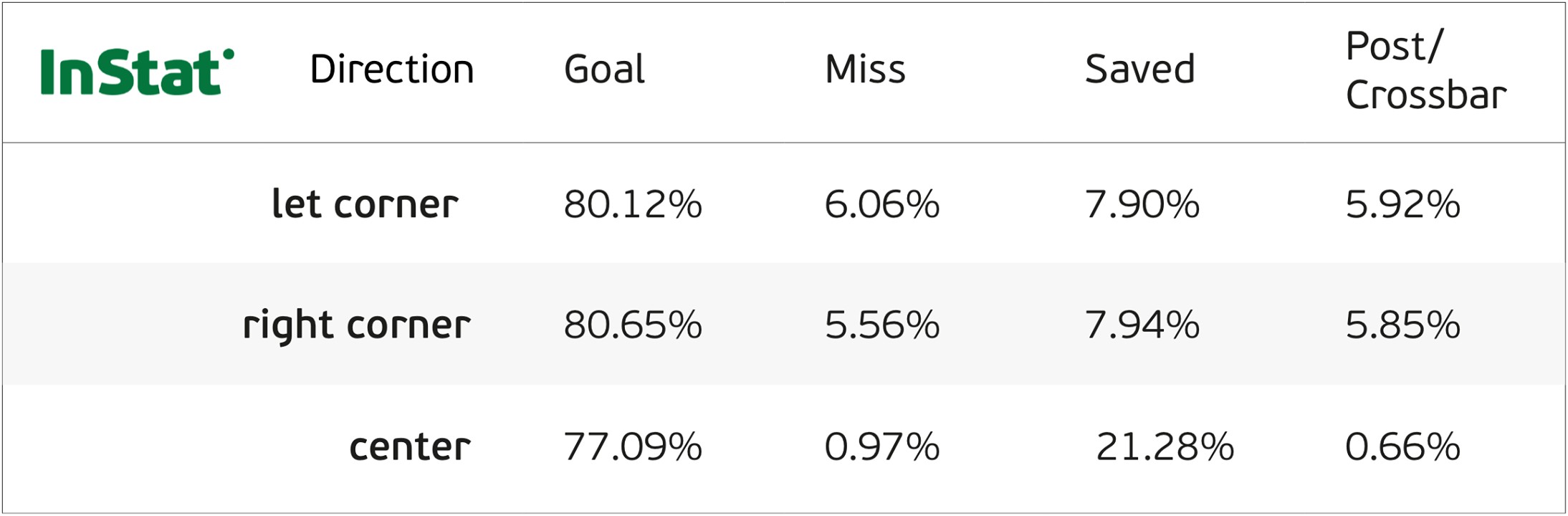
Studies show that the goalkeeper’s choice to remain in the centre of the goal occurs in only 1.1% to 2.4% of cases, while players who aim their shots toward the centre account for between 7% and 17%. This data indicates a high probability of success when choosing to shoot down the middle of the goal.
GOALKEEPER ANALYSIS
Pre-shot Moment: This is the time that passes from the referee’s whistle to the actual execution of the penalty. The goalkeeper must turn this moment into one of discomfort for the kicker. The longer it takes, the more pressure builds, the higher the heart rate, the more doubts arise, and the greater the chance the kicker loses focus, thus increasing the likelihood of a miss.
HOW CAN WE SLOW DOWN THIS PRE-SHOT MOMENT?
Move very slowly toward the goal (gain as much time as possible).
Stay outside the goal, talk to teammates, drink water…
Speak with the referee about the ball’s placement on the penalty spot.
Always act with self-control, projecting calm and composure. No yelling, no desperate gestures, no negative body language.
Try to maintain eye contact with the kicker as long as possible — make them break it first, aiming to intimidate or unsettle the shooter.
HOW CAN WE INFLUENCE THE KICKER?
Stand in front of the ball, close to it.
Touch the penalty spot and the ball.
Talk to the kicker. Knowing the player personally can be useful. If you’ve already saved a penalty from them, remind them. If they’re not a regular penalty taker, point that out. Remind them of the pressure of missing… These tactics can generate nervousness.
Use unusual sounds or noises to break focus.
Shift the pressure of the penalty back onto them.


PENALTY KICK EXECUTION MOMENT
We are referring to the moment between the referee’s whistle and the actual execution of the penalty kick — that intense instant where the kicker and the goalkeeper stand face to face. It is the most decisive moment, where the goalkeeper must interpret everything that unfolds.
The study of pre-kick indicators becomes especially relevant here, allowing the goalkeeper to operate almost automatically, to detect any anomalies and respond accordingly if something doesn’t go as planned, or to confirm what has been previously analysed. It is also the moment to make decisions and execute a strategy designed to stop the penalty.
WHAT ARE PRE-INDICATORS AND WHAT ARE THEY FOR?
They are related to observation. Pre-indicator techniques provide the athlete with information about the cues that appear before the main stimulus (pre-indicator), through which the behaviour of the opponent or the environment in general can be predicted.
Thus, we see that pre-indicators are variations in the environment that inform us about what is going to happen next. We can apply here all the principles of temporal anticipation as elements to consider in training. Sometimes, the learning of these pre-indicators occurs unconsciously, in what is known as the “goalkeeper’s experience,” in which the athlete has previously been exposed to similar circumstances and has undergone a learning process. Others might call this “intuition.”
The gaze: Goalkeepers must focus their attention on the opponent’s gaze, as it can provide highly relevant information. At the professional level, we can study the kicker’s gaze thanks to the large number of high-definition cameras available. In the gaze, we can observe fear, nervousness, or even determine if the kicker is trying to deceive us with their eyes.
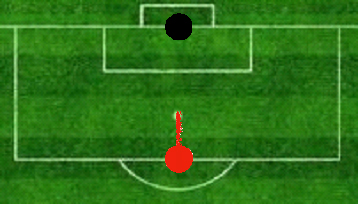
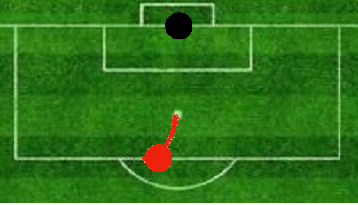
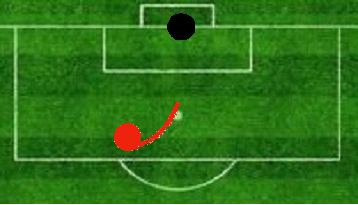
The run-up: This refers to the approach the opponent uses to take the penalty. If the run-up is frontal, there is a high probability that the shot will go to the opposite side of the kicking foot, or even straight down the middle. If the run-up is diagonal, it is most likely that the ball will go to the same side as the kicking foot.
Players tend to shoot to the opposite side of their dominant foot. If the run-up is diagonal, the shot is likely to be parallel, i.e., to the same side as the kicking foot. In contrast, if the run-up is frontal, it is likely the shot will go either straight or to the opposite side.
(Study: The Mindset of the Football Goalkeeper; Joan Cañadas, 2014).
The supporting foot: In 80% of cases, the direction in which the supporting foot points is the direction of the shot. However, relying solely on this pre-indicator has a downside: the very limited reaction time the goalkeeper has to observe it.
The hips: This refers to the observation of the hips at the moment of the shot. Depending on the type of run-up, the kicker will need to open the hips to shoot to their non-natural side, even when shooting with the inside of the foot.
The arm: Some studies (without scientific consensus) suggest that the position of the arm at the moment of the shot can indicate whether the kick will be crossed or not.
The kicking surface of the foot: Observing the part of the foot used to strike the ball can help determine whether the shot will be more or less powerful and more or less accurate.
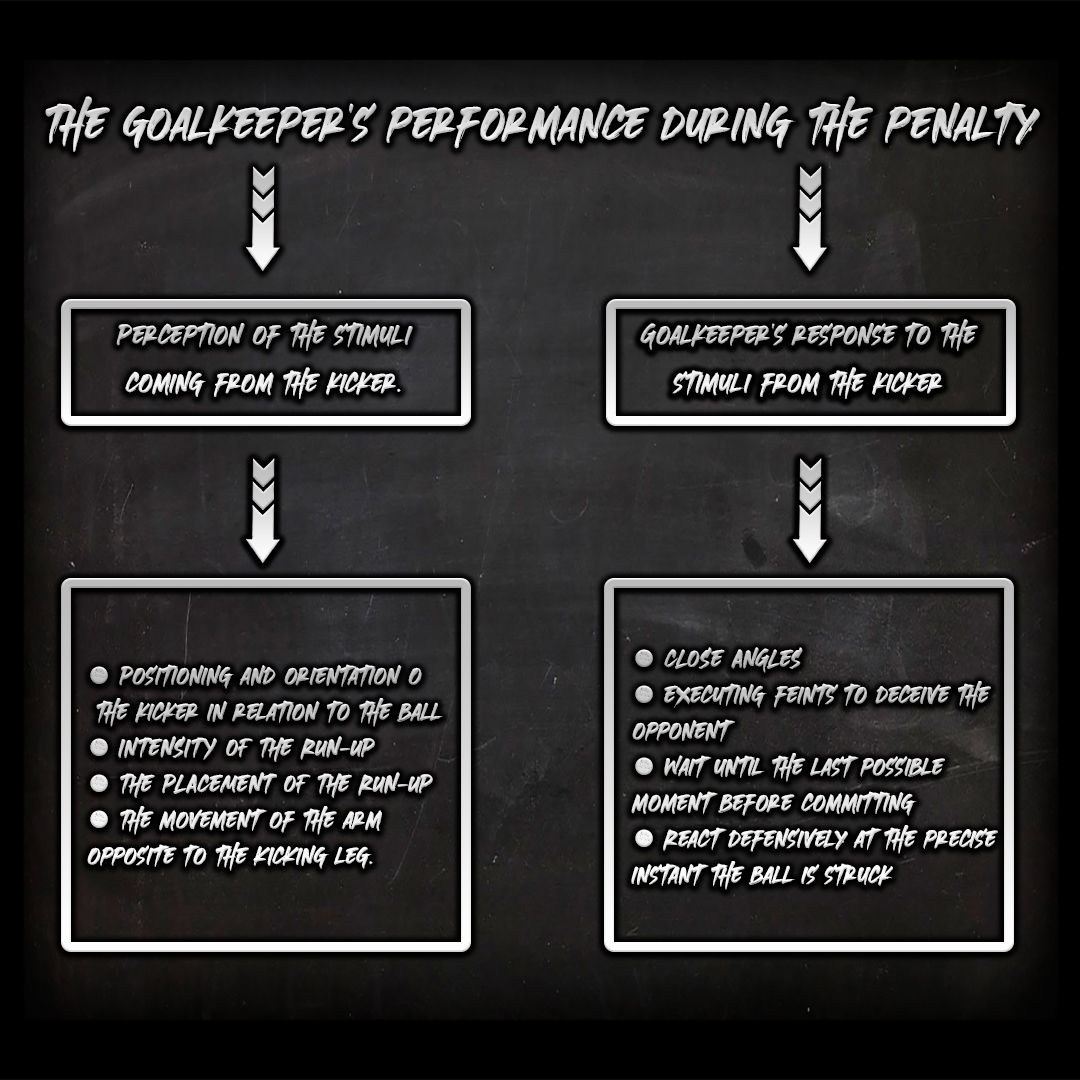
POSITIONING AND ORIENTATION OF THE KICKER IN RELATION TO THE BALL
Frontal run-up
Inside the foot
The opposite side of the kicking foot
Slightly curved run-up
Inside the foot
Same side as the supporting leg
Highly curved run-up
Inside the foot
The opposite side of the supporting leg
INTENSITY OF THE RUN
Light intensity
Inside the foot
Low to moderate shot power (accurate)
Moderate intensity
Inside or instep of the foot
Combines power and placement
High intensity
Instep (partial or full)
High power
Usually aimed at the opposite side of the kicking leg or towards the centre of the goal
SUPPORTING FOOT
Supporting foot very close to the ball
Inside the foot
The opposite side of the supporting foot (usually)
Supporting foot at a normal distance from the ball
Inside or instep of the foot
The ball can go to either side depending on the player’s orientation to the ball and the intensity of the run.
Support the foot far from the ball position
Inside or full instep
Usually to the opposite side of the kicking leg
MOVEMENT OF THE ARM OPPOSITE TO THE KICKING LEG IN THE FINAL SUPPORT PHASE
If the arm moves away from the body’s axis and rises above shoulder level
Crossed ball (kicking leg side or the side of that arm)
If the arm stays close to the body’s midline and is below shoulder level
The ball is kicked to the side of the kicking leg or on the opposite side of that arm.
If the arm makes a circular movement before the shot
This action can be a deceptive move intended to place the ball on the side of the supporting foot
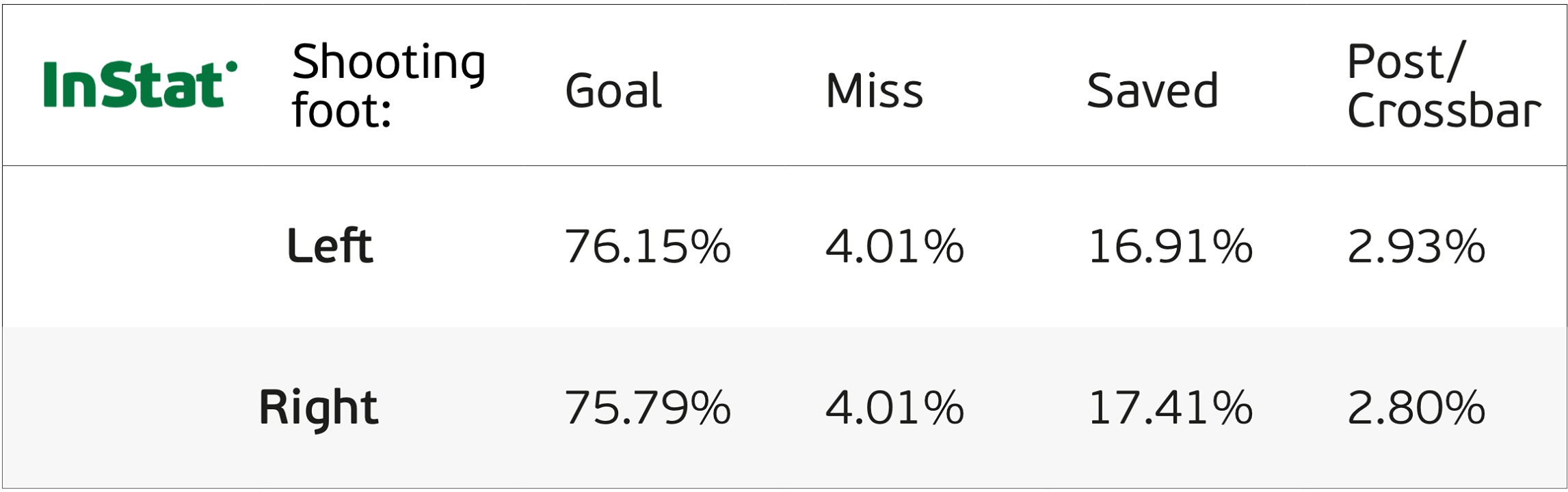
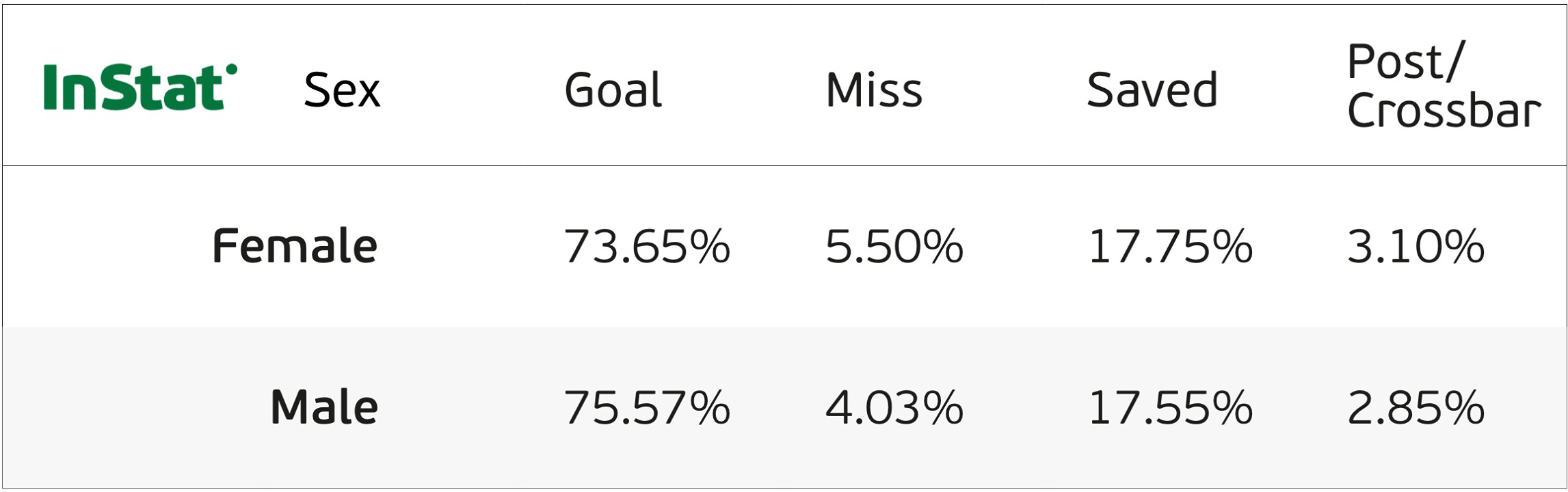
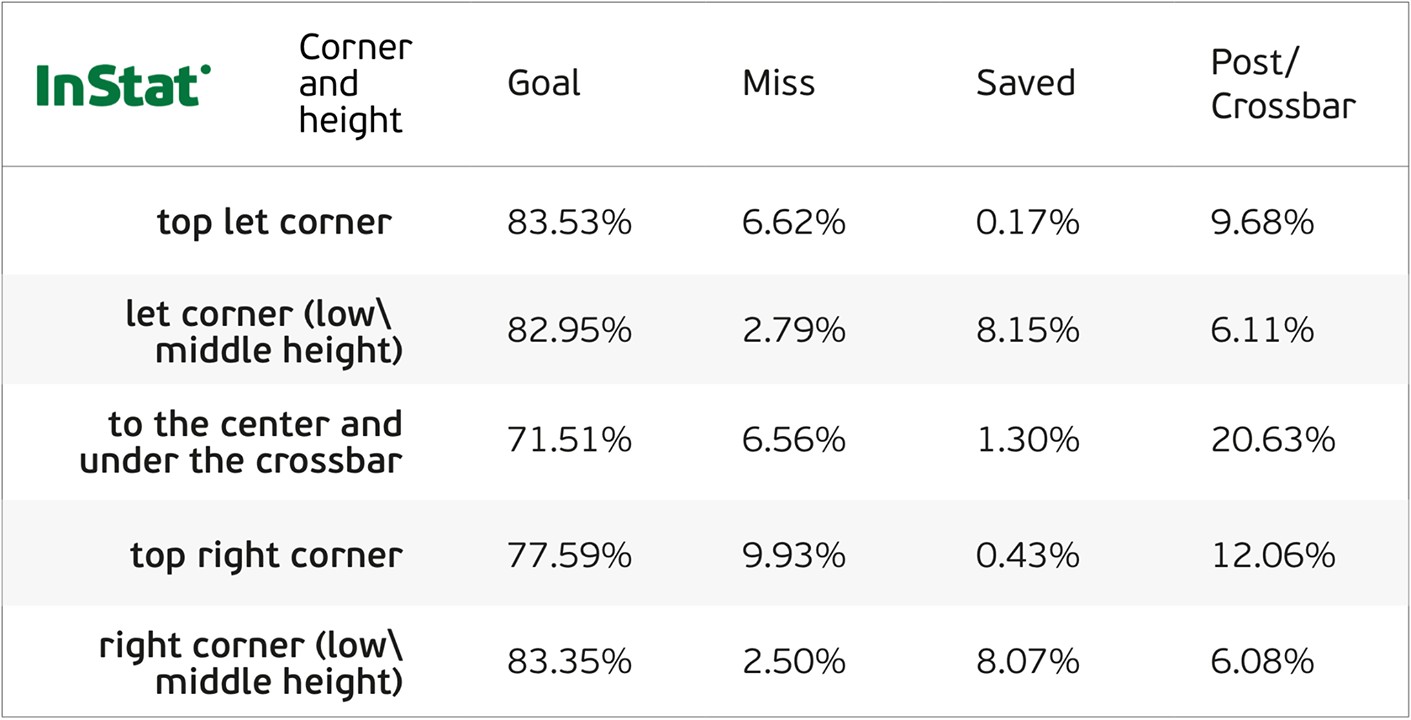
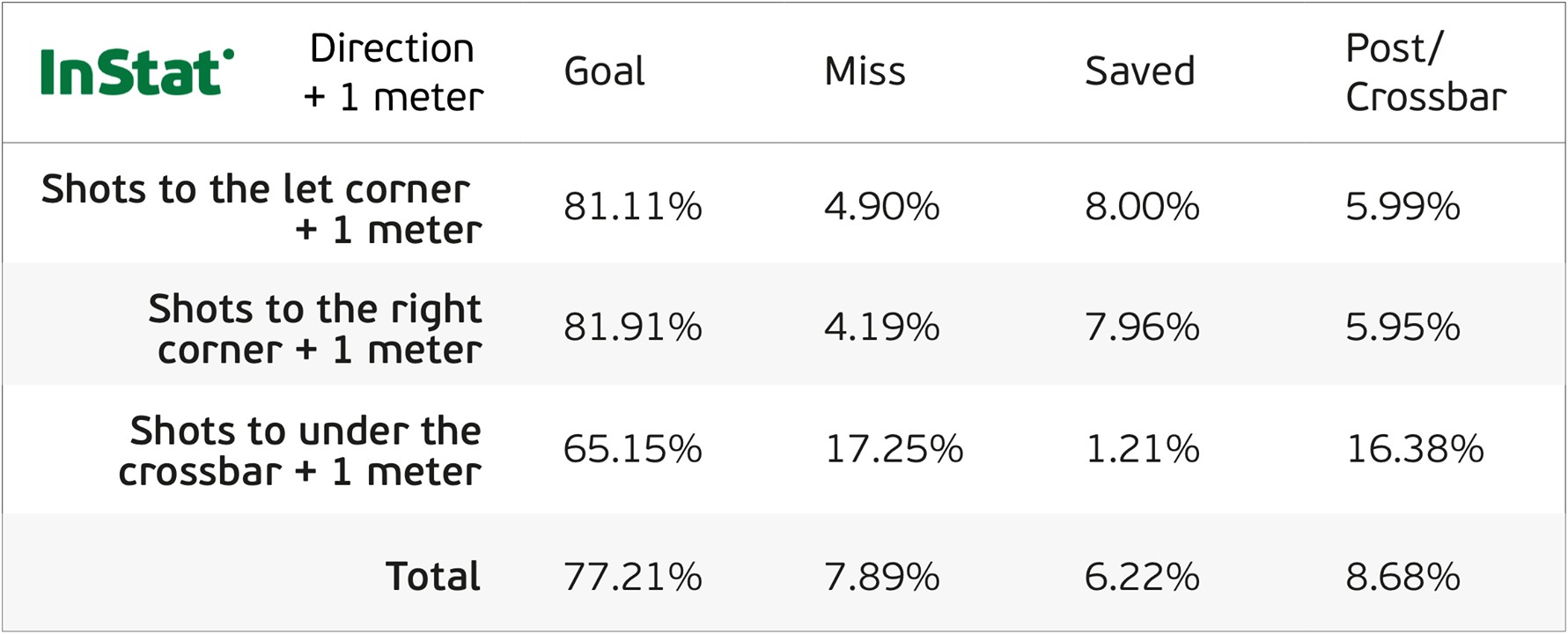
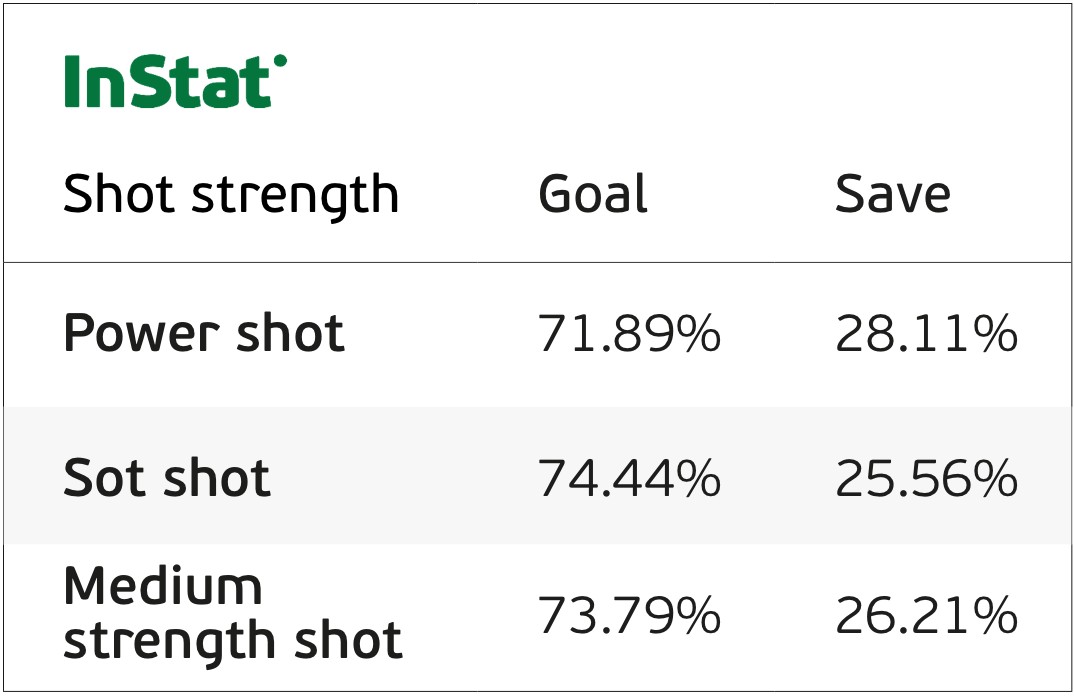
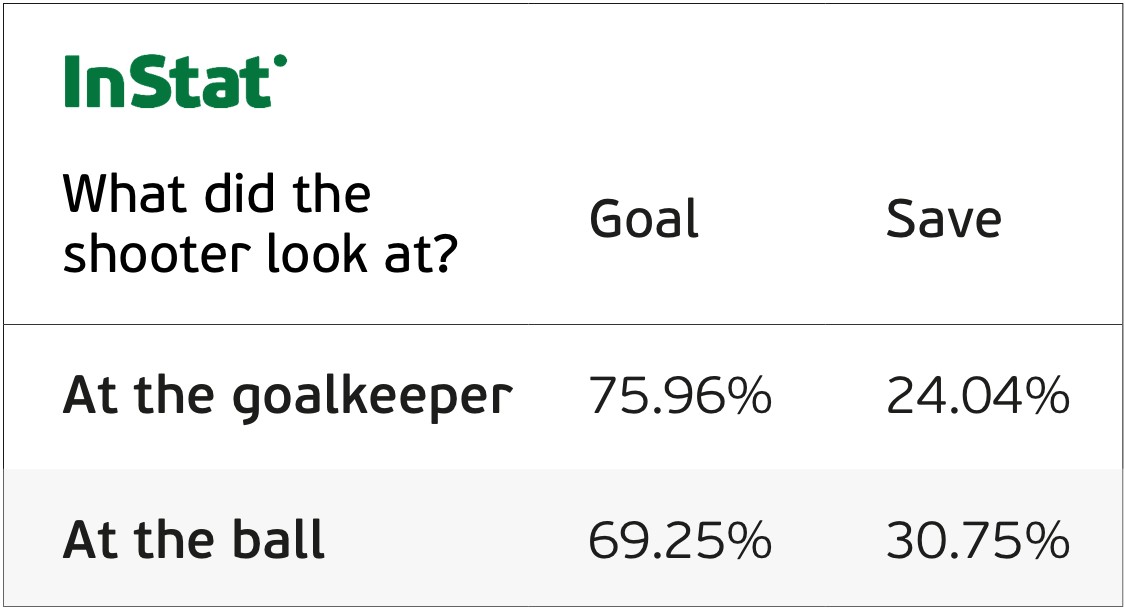
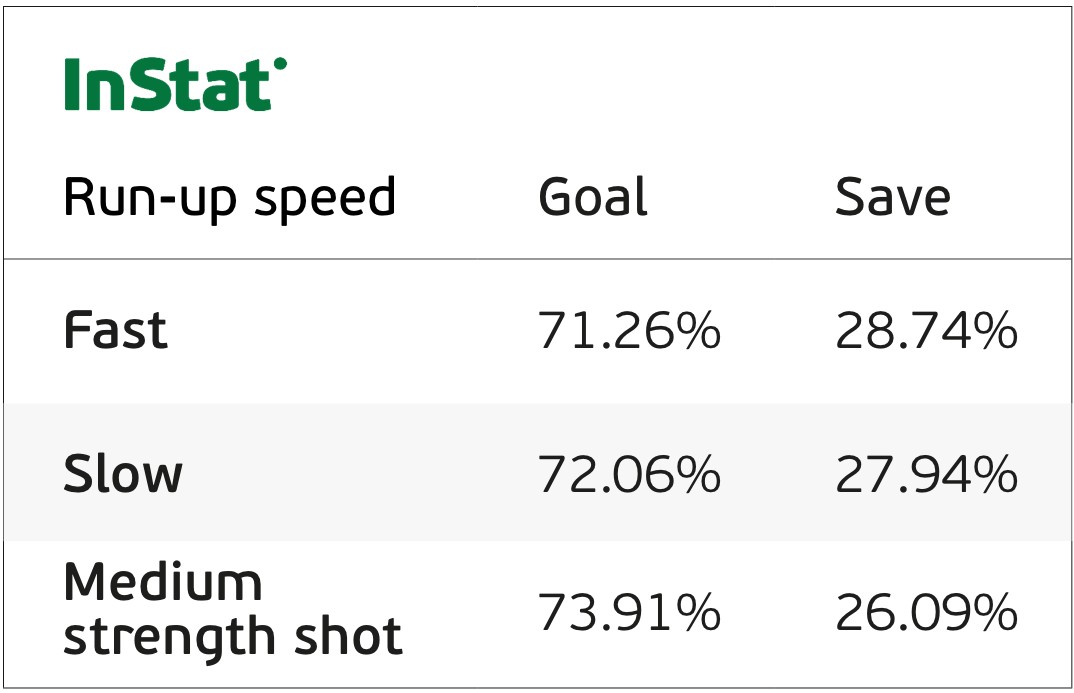
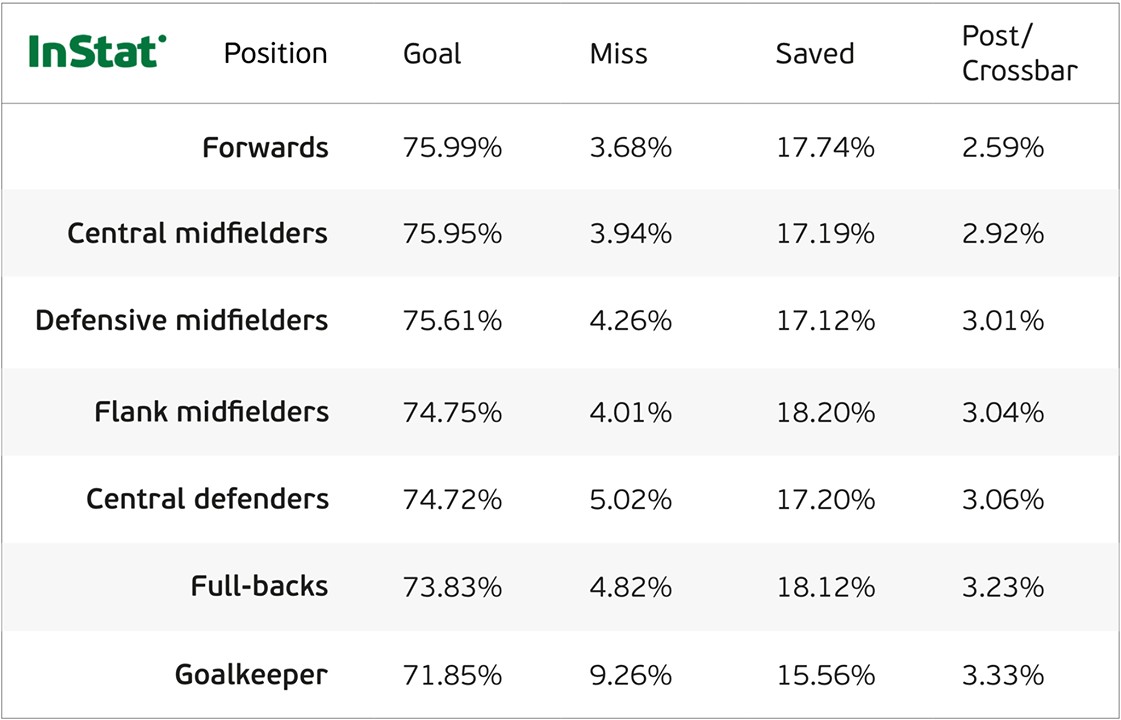
SOME STATISTICAL DATA


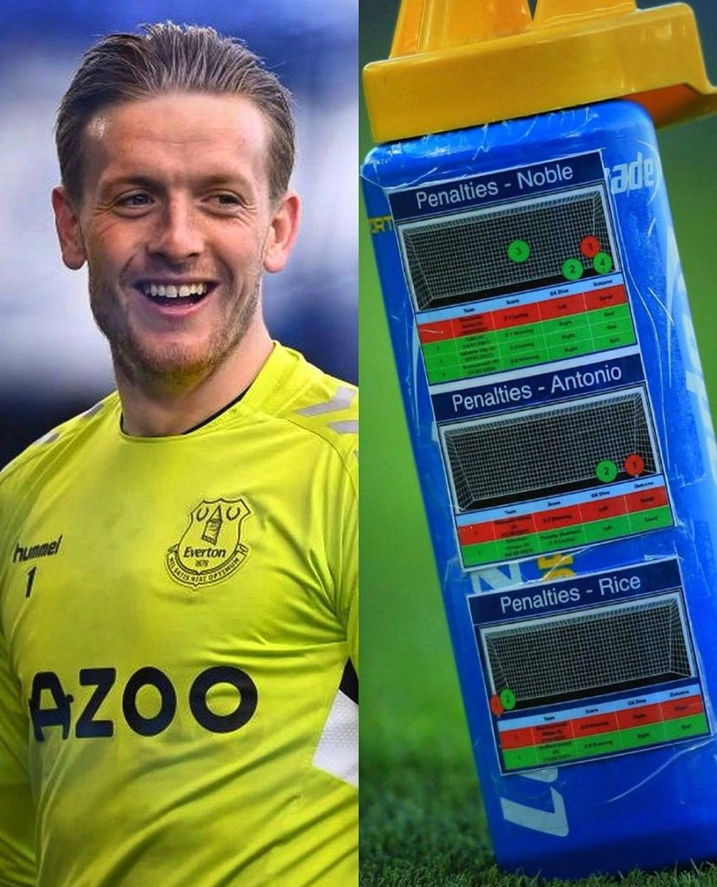
THE IMPORTANCE OF KNOWING THE OPPONENT
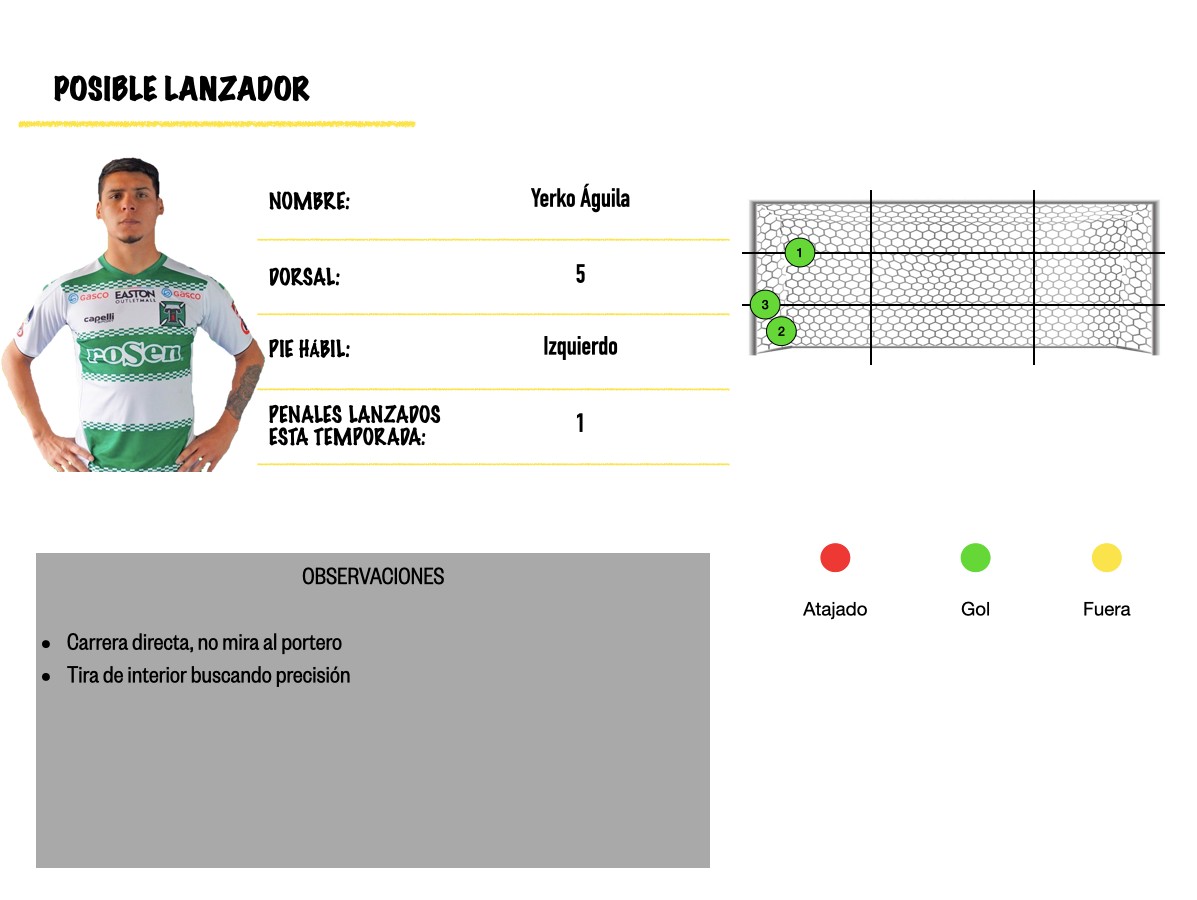
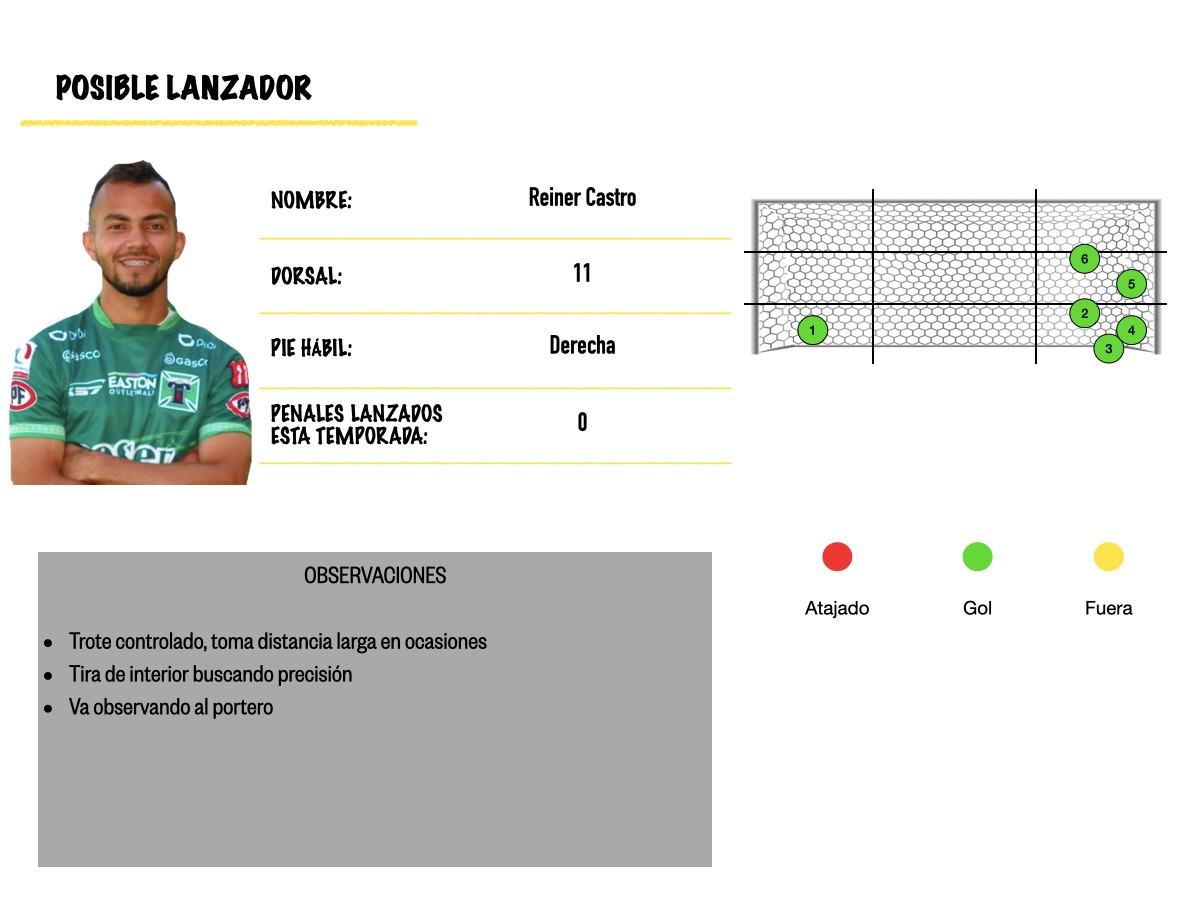
Create simple reports that serve as support, not as a complication, for the goalkeeper.
AUDIOVISUAL ANALYSIS REPORTS


Goalkeeper Coach A.C. Bernechea – Chile
Football Coach – INAF
Goalkeeper Coach Elite Level – INAF
Goalkeeper Coach Master – FutbolLab UCAV