HOW THE INCLUSION OF GOALKEEPERS IN TRAINING EXERCISES AFFECTS TEAM DYNAMICS
2019/25 COACH AND PHYSICAL TRAINER AT CD RODA VILLAREAL (NURSERY)
2019/20 PHYSICAL TRAINER AT CD ALMAZORA PREFERENTE G1 SPAIN
2017/19 PHYSICAL TRAINER AT FLORIANA F.C. (MALTA PREMIER LEAGUE)
2016/17 PHYSICAL TRAINER AT CF BORRIOL 3ra DIVISIÓN G6 SPAIN
2014/16 PHYSICAL TRAINER AT CD BURRIANA PREFERENTE G1 SPAIN
GRADUATE IN PHYSICAL ACTIVITY AND SPORTS SCIENCES
Technology is currently advancing at a rapid pace, offering an ever-growing number of tools that allow us to assess a wide range of aspects within sports. Training tasks are the fundamental component of our sessions — they prepare us for the “exam” on the weekend. But do these tasks truly deliver what we expect from them? A simple adjustment of their variables can lead us down very different paths.
The presence or absence of goalkeepers in a training task can significantly alter many factors within it. Simply having a goalkeeper and a goal on the pitch can lead players to adopt different physical, technical, and strategic behaviours — behaviours that would be quite different in exercises without a goalkeeper. Including the goalkeeper aligns the spatial context of the task with the logic of football, adding a strategic dimension to the physical space that directly influences the players’ decision-making and actions on the field. Depending on the objectives we pursue, we may choose to polarise the tasks — that is, to follow the internal logic of football (polarised) — or deviate from it with non-polarised tasks, such as possession-based drills without goals, goalkeepers, or finishing targets.
"WITH GOALKEEPERS, WE ORIENT THE EXERCISE SPACE TO THE LOGIC OF FOOTBALL"
As it is a simple variable to be manipulated during SSD, more and more researchers are dedicating their efforts to knowing the responses that players provoke, in their different technical-tactical, physical or physiological dimensions (Castellano et al., 2012 ; Dellal, Chamari, Pintus, Girard Cotte, and Keller, 2008; Mallo and Navarro 2008; Halouani, Chtourou, Dellal, Chaouachi, and Chamari; 2014; Sassi, Reilly, and Impellizzeri, 2004).
As a guide to action, below are different studies of how the action of the goalkeeper affects the small sides games (SSD) exercises on the players:
Sassi y cols. (2004)
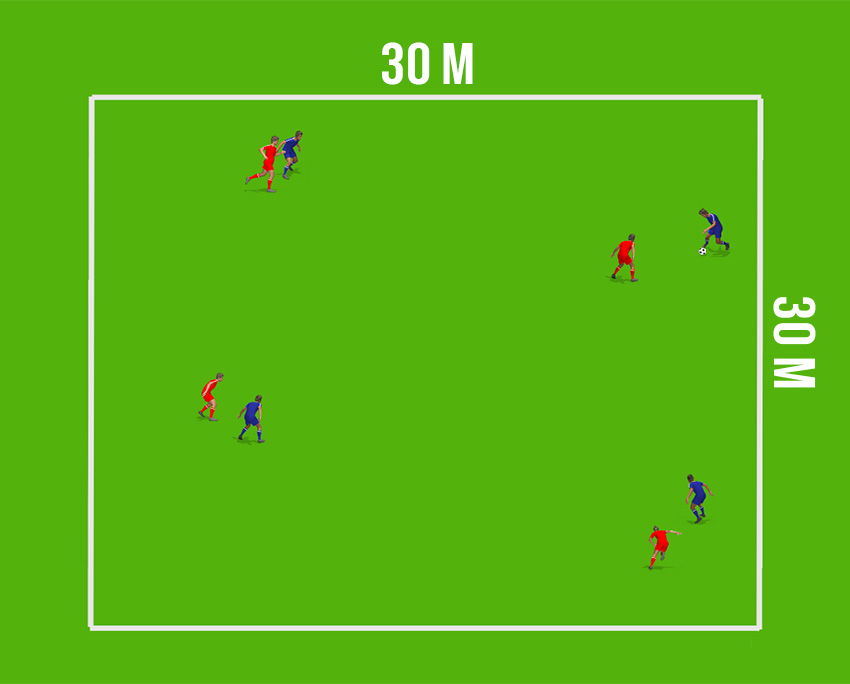
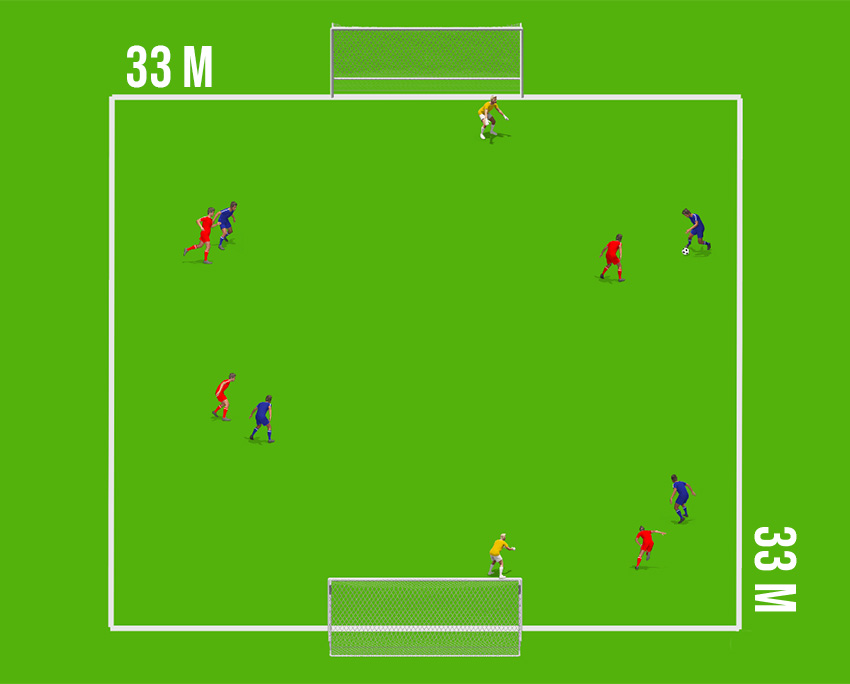
They analyzed the demands of two types of SSD, 4×4 with goalkeepers and 4×4 without goalkeepers in 30x30m spaces and 33x33m. The results indicated that in exercises with non-oriented space (without goalkeepers) higher values were obtained in% HRmax (maximum heart rate) and LA (Lactate) than in the game with goalkeepers.
Mallo y Navarro (2008)
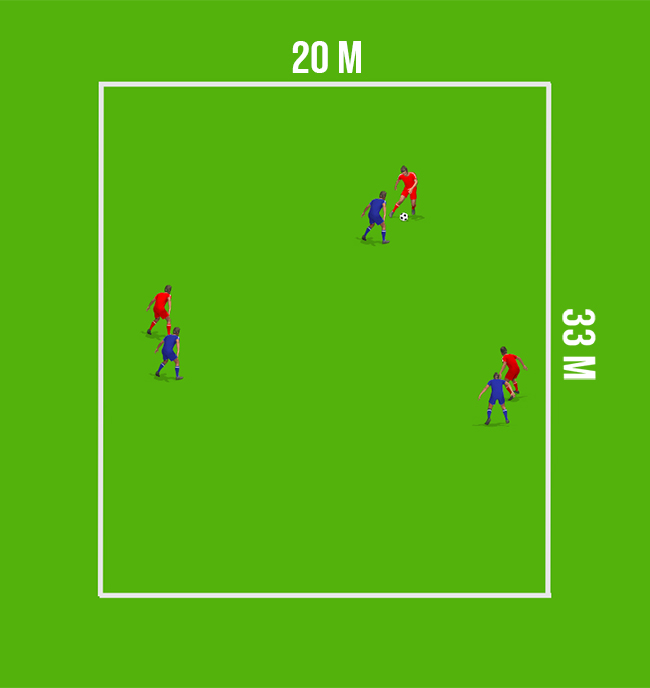
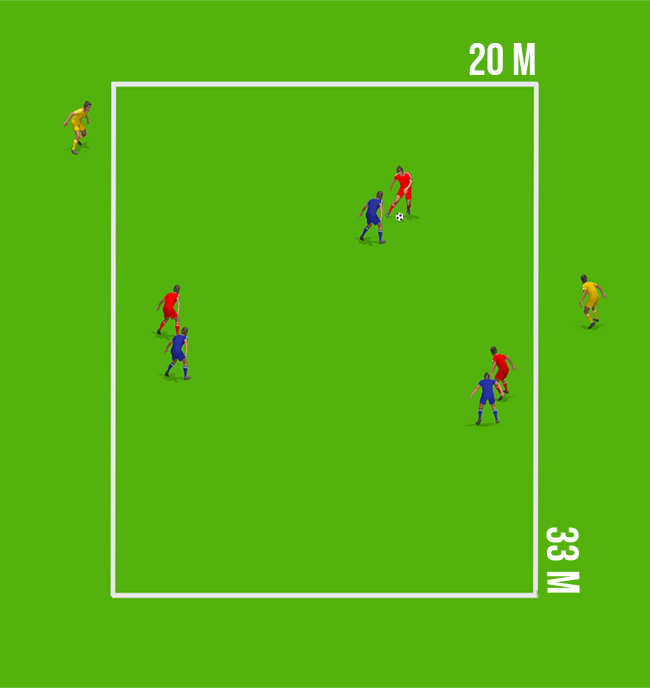
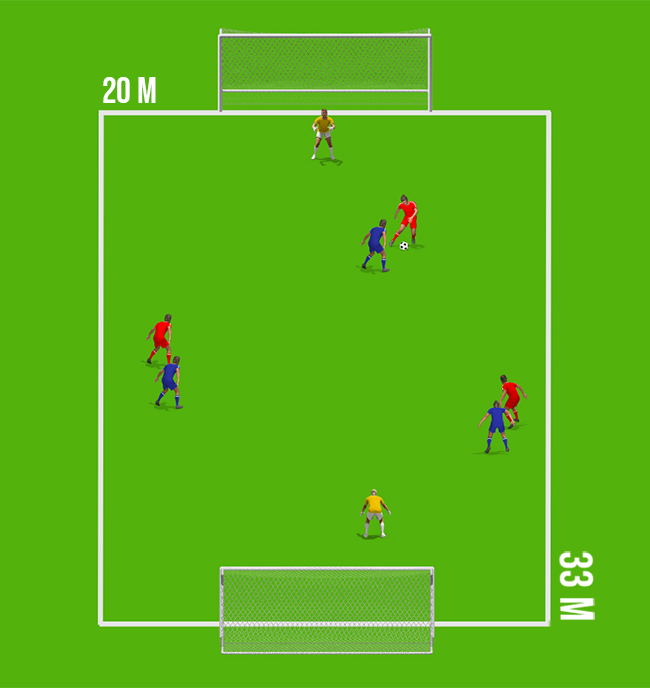
They studied the kinematic, physiological and technical demands on 3 × 3 exercises of 3 different types: ball possession without keepers, ball possession 3 × 3 with 2 external players without GK and 3 × 3 exercises with goalkeepers. All this on a surface of 33x20m. The final results showed an intensity of 88% Heart Rate max when playing with goalkeepers and 91% Heart Rate max when playing without goalkeepers. The authors concluded that goalkeeping exercises decrease the intensity of the exercise, which could be due to the fact that the players must organize themselves strategically to defend a specific area.
Casamichana, Castellano, Gonzalez-Morán, García-Cueto y García-López (2011)
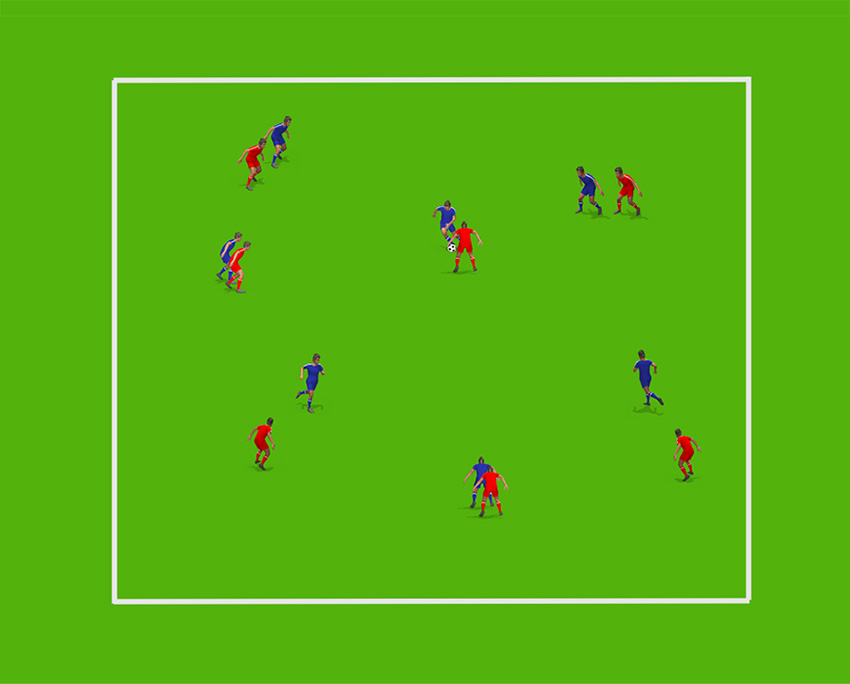
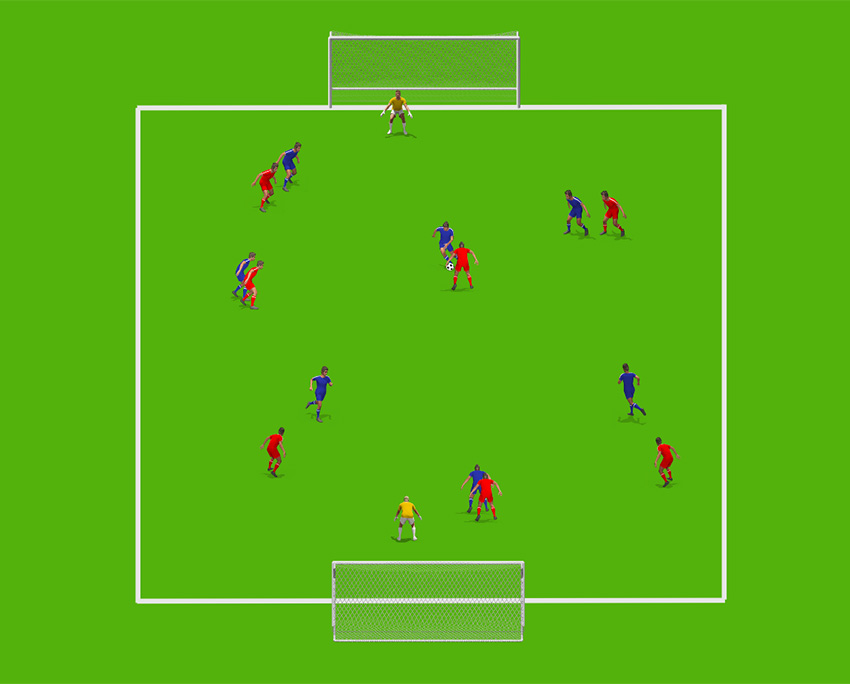
With results similar to the previous study, they analysed the physiological demand in different SSD 4 × 4 (non-oriented space, oriented space with goalkeepers and big goals, and oriented space without goalkeepers and with small goals). The mean HR (mean heart rate) values obtained were higher in maintenance exercises without goalkeepers and with small goals compared to exercises with goalkeepers and big goals.
Dellal y col. (2008)
They obtained values contrary to the previous studies since they analyzed an 8 × 8 reduced game task with and without a goalkeeper. They compared the cardiac response and the percentage of reserve HR showing greater intensity in tasks oriented with goalkeepers. Concluding that this change could be due to the greater motivation of the players due to the establishment of objectives to protect and achieve, such as own goals and those of the opponent.
Alemdaroglu y Arslan (2013)
They analyzed 2 × 2, 3 × 3, 4 × 4 SSD with and without keepers where the internal load and the external load were greater during exercises without GK. The% Hear Rate, Lactato and subjective perception of effort were higher during the exercises without goalkeepers. This decrease in intensity could be due to the goalkeeper’s passes that create numerical superiority of the possessing team and the reduction of the effective playing time, as a result of the departure of balls after shots or shots on goal. They add that in situations with goalkeepers, players tend to travel less distance due to the proximity of the goals, together with the number of options to score.
Conclusion
Having few studies that show these results, they should be taken with caution when preparing exercises. Of course, they can serve as a guide, as well as these small conclusions:
The manipulation of the training process must be taken into account, since a small change can provoke different responses in the players.
Motivation of the players to score a goal vs. defensive organization to protect a specific area, are the hypotheses of increase or decrease of physiological intensity in reduced oriented game, with or without goals.
There is a greater variability in the response of the players when the game is oriented with goalkeepers, the variability in the physical aspects seems to increase.
The space can be polarized in different ways, influencing the physiological, locomotive and technical-tactical response of the players, and interacts with the variable number of players participating in the task.
Heart Rate, lactate and subjective perception of effort can be different in an exercise depending on whether there are goalkeepers or not.
MARC FLOR RUFINO
We use cookies to give the best user experience on our website. Your continued use of this site assume your agree.